

- Overuse & incorrect loading: Unilateral movement patterns, prolonged sitting, or intense sport can cause pressure, pulling, or friction pain. Often associated with groin pain.
- Hip osteoarthritis: Cartilage degradation leads to stiffness, pain on exertion, and later also pain at rest. Hip osteoarthritis usually develops insidiously and is one of the most common causes of hip pain.
- Inflammatory or irritative processes: Bursitis, especially on the lateral thigh in the area of the greater trochanter, tendinitis at tendon insertions, or irritation of the iliopsoas can trigger pain in the groin or lateral hip area.
- Metabolic or autoimmune diseases: Rheumatoid diseases or metabolic disorders such as gout can permanently affect the hip and cause recurrent pain.
- Structural damage: Advanced wear can lead to significant restriction of movement in the long term. In some cases, a hip prosthesis becomes necessary.
Hip pain can occur suddenly or develop over time, affecting both physically active individuals and people in everyday life. The hip is a weight-bearing joint that absorbs significant loads and enables free movement, which means symptoms can be highly varied.
Causes of hip pain can range from functional disorders and overuse to structural changes such as hip osteoarthritis, cartilage degeneration, or inflammatory processes. Groin pain, often mistakenly interpreted as a purely muscular problem, can also indicate an early hip joint issue.
A thorough orthopedic examination helps to correctly assess the symptoms and initiate appropriate measures. Particularly in cases of persistent pain, evaluation is advisable to prevent secondary damage and preserve mobility.
As a hip specialist in Innsbruck, Dr. Gregor Pittl reliably diagnoses your hip pain and prioritises non-surgical, conservative treatments.

Dr. Gregor Pittl
Medically reviewed by
Specialist in Orthopaedics, Orthopaedic Surgery and Traumatology
Dr. Gregor Pittl is a specialist in orthopaedics, orthopaedic surgery and traumatology and worked for ten years, most recently as a senior physician, at the University Clinic for Orthopaedics Innsbruck. His focus is on the conservative and surgical treatment of joint wear (arthrosis) as well as regenerative therapy methods such as ACP autologous blood therapy.
Last medically reviewed on 20. July 2026
More about Dr. Gregor Pittl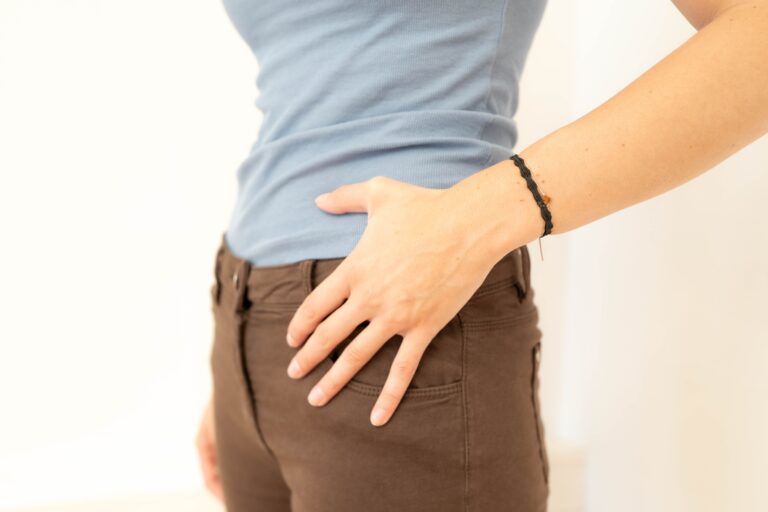
What Causes Hip Pain?
Cause
Some types of hip pain and hip problems can be explained by poor posture, prolonged sitting, or muscular tension, while in other cases, wear-and-tear processes or inflammatory changes are at the forefront. Often, hip problems also manifest indirectly, for example as groin pain, buttock pain, or radiating discomfort into the thigh. Younger people more frequently suffer from overuse complaints, muscular imbalances, or sports-related irritations.
In middle and older age, degenerative changes such as hip osteoarthritis or incipient cartilage wear are more common. In cases of advanced structural damage, a hip prosthesis may eventually become necessary.

Common causes can include:
Complaints & Symptoms
Symptoms
Whether the pain occurs when walking, after prolonged sitting, during sport, or at night provides important clues about the underlying cause. Hip pain can feel different: stabbing, pulling, throbbing, or deeply localised in the joint. Groin pain or buttock discomfort are also common indicators, as the hip often radiates pain signals to adjacent regions.
Careful observation helps to correctly classify the complaints. Dr. Pittl, your hip specialist in Innsbruck, can precisely classify your complaints. A description of symptoms that is as accurate as possible further supports the diagnostic process.
Typical symptoms of hip problems include:
- Pain when walking, turning, or standing up
- Groin pain, often intensified with exertion or when lifting the leg
- Feeling of stiffness after periods of rest
- Pain on movement when bending or extending the hip
- Lateral hip pain when lying down
- Radiating pain into the thigh or buttocks
- Night-time hip pain, common with hip osteoarthritis
- Pain-related limitation of walking distance
Common clinical pictures for hip problems include:
Medical Conditions
- Hip osteoarthritis: Joint wear with pain on exertion and at rest
- Bursitis trochanterica: painful bursal irritation on the lateral hip bone
- Iliopsoas syndrome: irritation of the hip flexor, often a cause of groin pain
- Femoroacetabular impingement – FAI: mechanical narrowing between the femoral head and socket, especially in younger patients
- Labral lesions: irritations or tears of the joint labrum
- Femoral head necrosis / bone marrow oedema: circulatory disorder or fluid accumulation in the bone
- Muscular overuse syndromes: Gluteal tendons, iliotibial tract complaints, adductors, piriformis
Diagnosis & Treatment with Dr. Pittl – Your Hip Specialist in Innsbruck
Treatment
An accurate diagnosis is crucial to correctly classify your hip complaints and treat them accordingly. The orthopaedic examination proceeds as follows:
- Anamnesis: When do the complaints occur? Dependent on exertion? At rest? As groin pain?
- Physical examination: Assessment of mobility, pain points, muscular tension, and functional tests of the hip.
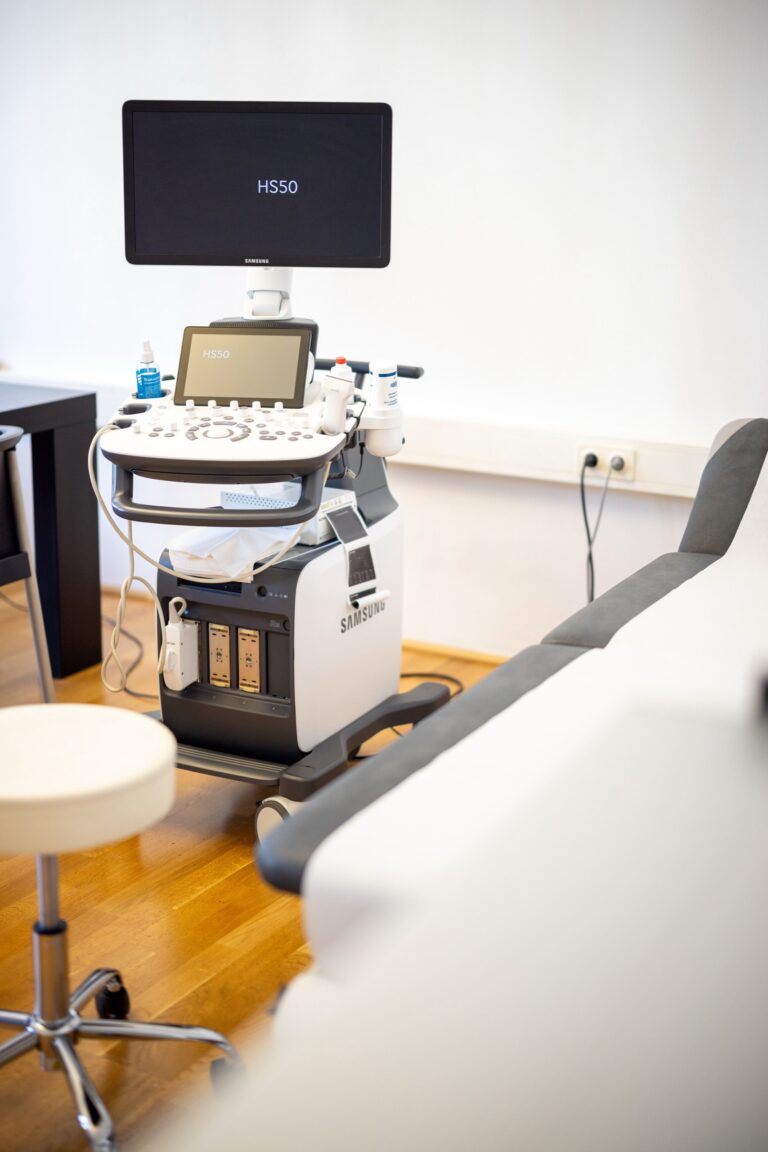
- Imaging: X-ray to assess joint space and degree of arthritis, ultrasound to visualise tendons and bursae, MRI in case of structural suspicion – if necessary
Treatment Methods for Hip Pain
As a hip specialist in Innsbruck, Dr. Pittl relies on proven conservative and regenerative therapies rather than rushing into surgery. However, in cases of advanced hip osteoarthritis, a surgical solution may sometimes be unavoidable. In such cases, the implantation of a hip prosthesis can significantly improve mobility and quality of life.
- Shockwave therapy for tendon irritation and insertional tendinopathy, painful bone marrow oedema
- Magnetic field therapy to support treatment of hip osteoarthritis, painful bone marrow oedema, irritation, or bone metabolism disorders
- ACP autologous blood therapy to reduce inflammation and improve joint function
- Physiotherapy for strengthening, mobilisation, and optimisation of gait pattern
- Infiltrations for acute inflammatory symptoms
Your Hip Specialist in Innsbruck
Dr. Gregor Pittl
Many hip complaints can be reduced through careful examination and an individually planned therapy concept, and hip mobility can be significantly improved again.
Contact us if you would like to have your hip pain clarified by the hip specialist in Innsbruck. You are also welcome to arrange an appointment for a private consultation.
Frequently Asked Questions
At what age can hip osteoarthritis occur?
Hip osteoarthritis can generally develop at any adult age, but it occurs most frequently from the age of 50. In cases of malalignments, previous injuries, or high athletic strain, it can also begin significantly earlier.
Can hip surgery be avoided?
As long as conservative measures provide relief, many complaints can be treated without surgery. A hip replacement is only considered in cases of severe wear and tear.
When should hip pain be medically assessed?
If symptoms persist, cause groin pain, occur at night, or significantly limit mobility.
What signs indicate hip osteoarthritis?
Typical signs of hip osteoarthritis include stiffness after rest, pain when walking, restricted mobility, and pain with weight-bearing.
Which conservative therapies are reliably effective for hip or groin pain?
Many cases of hip and groin pain can be reliably treated conservatively, for instance, with physiotherapy, shockwave or magnetic field therapy, and ACP. The orthopedic examination determines which therapy is suitable.