

Pediatric Orthopedics
Treatments
Pediatric orthopedics in Innsbruck with Dr. Gregor Pittl focuses on the early detection and treatment of orthopedic conditions and developmental abnormalities in childhood and adolescence. Children’s and adolescents’ physical development progresses in dynamic phases that require attentive monitoring of the musculoskeletal system. Changes may therefore present and develop differently. As bones and joints are still growing, the approach differs fundamentally from the treatment of adults. Early orthopedic assessment helps identify misalignments and developmental issues in good time and provide targeted support.
What is pediatric orthopedics?
Pediatric orthopedics is a specialized subfield of orthopedics and deals with congenital and acquired conditions of the musculoskeletal system in infants, children, and adolescents. The focus is on assessing growth, posture, and movement patterns, as well as the early diagnosis of developmental abnormalities. Early assessment can reduce functional limitations and promote healthy skeletal development.
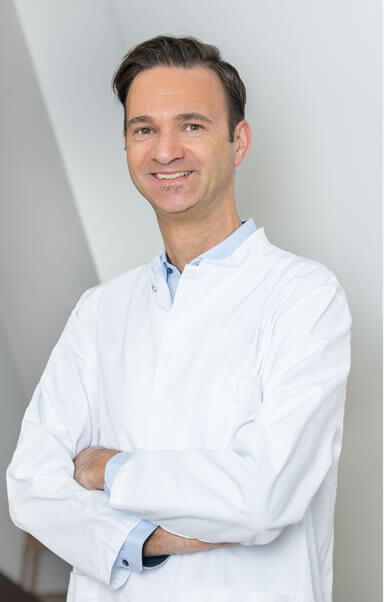
Dr. Gregor Pittl
Specialist in Orthopaedics, Orthopaedic Surgery and Traumatology

Main areas of focus in pediatric orthopedics
Treatment covers the full spectrum of the developing skeletal system:
- Hip development: Early detection of dysplasia immediately after birth
- Spine: Monitoring posture and treating curvatures
- Foot alignment: Correction of axis deviations and arch weakness such as bowlegs, knock-knees, as well as flat or splay feet
- Growth guidance: Support in cases of unequal limb length growth
- Support for growing pains: Differentiation between harmless growth spurts and stress-related complaints requiring treatment.
- Orthopedic care for sports injuries in children: Appropriate treatment with consideration of the growth plates
Most common conditions and injuries in pediatric orthopedics
Pediatric orthopedics in Innsbruck with Dr. Pittl provides the necessary confidence in diagnosing the most common orthopedic conditions in children. These include:
- Maturation disorders of the infant hip (hip dysplasia)
- Flexible flatfoot, fallen arches, or flat feet as a foot deformity in children
- Scoliosis and other spinal deformities
- Acute or recurrent sports injuries in children
- Overuse complaints in physically active adolescents
- Postural abnormalities at school age
Procedure
Diagnostic process & treatments in pediatric orthopedics
The pediatric orthopedic assessment follows a structured approach:
- Medical history: Recording symptoms, development, physical load, and family factors
- Clinical examination: Assessment of posture, mobility, limb alignment, and gait pattern
- Imaging as needed: Infant ultrasound to assess the baby’s hip, or X-ray or ultrasound if scoliosis or malalignment is suspected
- Treatment planning: Defining conservative measures such as observation, orthotics, physiotherapy, or targeted adjustment of physical load
- Follow-up: Regular appointments in pediatric orthopedics in Innsbruck with Dr. Pittl to monitor the success of the measures during the growth process

Make an appointment at our practice.
Dr. Gregor Pittl
The majority of paediatric orthopaedic findings can be treated purely conservatively through early intervention. Dr. Gregor Pittl’s approach is to limit surgical interventions in children to an absolute minimum and instead utilise the body’s natural remodelling processes. Early diagnosis can significantly help to identify maldevelopments in good time and support the musculoskeletal system healthily. Please feel free to take advantage of an extended private consultation.
Frequently Asked Questions
When should your child undergo a pediatric orthopedic examination?
In the event of an unusual gait, deformities, recurrent pain, or as part of recommended preventive check-ups.
When is the best time for the infant ultrasound?
In Austria, the hip ultrasound is typically performed between the 4th and 8th week of life as part of the Mother-Child Pass. For risk factors such as breech presentation or a family history, the examination may be advisable within the first few days of life.
How do growing pains differ from actual injuries?
Growing pains usually occur in the evening or at night and typically affect both legs. In contrast, localized pain after exertion or acute sports injuries in children should always be medically evaluated by an orthopedic specialist.
Do foot deformities in children always require treatment?
Not every foot deformity requires treatment. The assessment depends on age, severity, and symptoms.
How do I recognize scoliosis in my child?
Common signs include uneven shoulders or a rib hump when bending forward. Since scoliosis causes no pain in its early stages, regular spinal check-ups during growth are important.