

There are four grades of severity: In Grade 1, the cartilage surface is merely roughened; in Grade 4, it is worn down to the underlying bone. The degree of severity is usually only determined during diagnostic imaging or arthroscopy and is a decisive factor in the choice of treatment.
Cartilage damage
Symptoms
Recognising cartilage wear and protecting joints sustainably
Cartilage damage (medically chondropathy) is damage to the articular cartilage that can result from wear and tear, incorrect loading or an injury. Typical signs include pain under exertion, stiffness after periods of rest, swelling or a noticeable rubbing sensation in the joint. The knee is particularly frequently affected, but in principle any joint can be damaged. The extent of the damage is classified into four grades of severity and depends on the location, cause and individual findings. If left untreated, the risk of subsequent osteoarthritis can increase, which is why early orthopaedic assessment is advisable. Depending on the degree of severity (1–4), Dr Gregor Pittl determines the exact cause and puts together the most suitable treatment method for you.

Dr. Gregor Pittl
Medically reviewed by
Specialist in Orthopaedics, Orthopaedic Surgery and Traumatology
Dr. Gregor Pittl is a specialist in orthopaedics, orthopaedic surgery and traumatology and worked for ten years, most recently as a senior physician, at the University Clinic for Orthopaedics Innsbruck. His focus is on the conservative and surgical treatment of joint wear (arthrosis) as well as regenerative therapy methods such as ACP autologous blood therapy.
Last medically reviewed on 22. July 2026
More about Dr. Gregor Pittl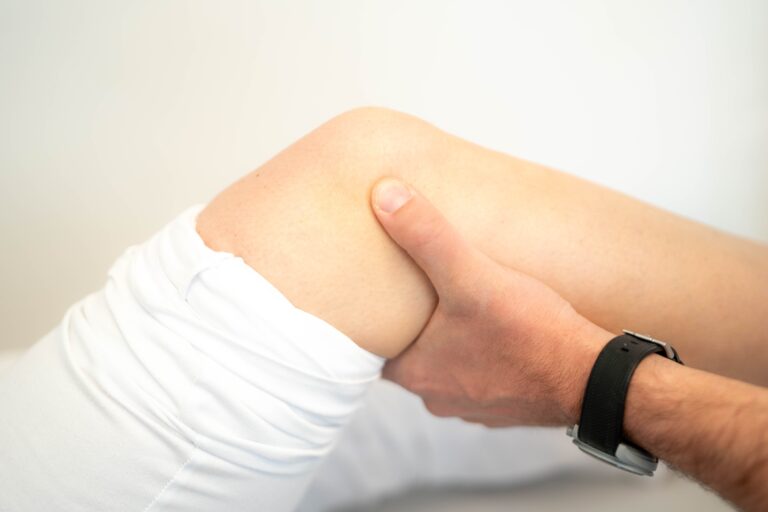
What is meant by cartilage damage in orthopaedics?
Cause
Cartilage damage refers to an impairment of the joint surface, ranging from minor surface changes to deep cartilage defects. It can arise from both an acute injury and gradually through wear and tear.
The most common causes include acute injuries such as a twisting or impact trauma during sport, repeated, heavy strain on the joint due to occupational stress or sport, joint misalignments that place uneven stress on the cartilage, obesity in combination with a sedentary lifestyle, hereditary factors, and a sequela following joint operations or repeated joint inflammations.
According to an evaluation by the patient portal of the German Society for Orthopaedics and Trauma Surgery, 59% of those affected reported an acute traumatic cause, while in 41% the damage developed gradually without recognisable trauma, most frequently in connection with football or handball. Source: Orthinform (DGOU) – Cartilage Injuries.
The knee joint is most frequently affected (also known as chondromalacia or chondromalacia patellae if the back of the kneecap is affected), but in principle the hip, shoulder, ankle or elbow can also develop such damage.

Grades of severity
Symptoms & Treatment
Symptoms
Cartilage damage often manifests itself through the following signs:
- Pain during and after exertion, which subsides at rest
- Start-up pain and stiffness after long periods of rest, for example in the morning
- Occasional swelling due to joint effusion
- A rubbing, grinding or locking sensation in the joint
- In advanced cases: Pain that also occurs independently of exertion
How does the assessment of cartilage damage work?
Treatment
- Medical history and physical examination: Dr Pittl discusses the symptoms, their development, previous injuries and individual strain in everyday life or sport.
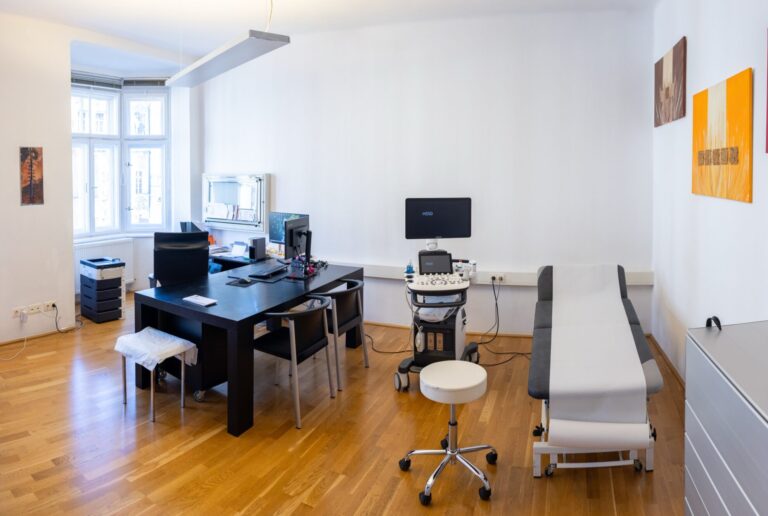
- Diagnostic imaging: An X-ray provides information about the bony situation and the joint space. An MRI scan usually shows the condition of the cartilage much more precisely.
- Classification of severity: Based on the imaging, which is sometimes supplemented by arthroscopy, the findings can be assigned to one of the four grades of severity.
- Individual therapy decision: Depending on the results, conservative measures such as physiotherapy and load adjustment or, in selected cases, a regenerative treatment option such as stem cell therapy, which is intended to support the body’s own cartilage build-up, may be considered. A combination with autologous blood therapy (ACP) may also be useful in individual cases.
Treatment Approaches
The appropriate treatment depends on the severity, location, and individual findings:
- For mild to moderate cartilage damage, conservative measures such as physiotherapy or adapted loading are often sufficient.
- For selected cartilage damage, regenerative stem cell therapy offers an innovative way to relieve pain and support natural joint function: This involves taking the body’s own fatty tissue, processing it by centrifugation, and injecting the resulting stromal vascular fraction (SVF) into the affected joint. Compared to a larger surgical procedure, this approach offers several practical advantages: The procedure is minimally invasive, performed on an outpatient basis under local anaesthesia, uses only the body’s own material, and usually a single treatment is sufficient. Depending on the findings, a combination with autologous blood therapy (ACP) may also be useful to further support the healing process. Whether stem cell therapy is suitable in an individual case depends on the extent of the cartilage damage and the available scientific evidence, which varies depending on the study, cell type and procedure and cannot be applied indiscriminately to every cartilage damage. The treatment does not replace surgery if it is medically indicated and is a self-pay service to be borne privately. You can find out more about the procedure, evidence and limitations of stem cell therapy on the Stem Cell Therapy page.
- ACP Autologous Blood Therapy: Another biological procedure for treating cartilage damage is autologous blood therapy. Here, concentrated platelets from the patient’s own blood release growth factors that alleviate irritation and stimulate cell metabolism in the joint.
- Surgical Procedures: If conservative and biological measures are insufficient or if there is a deep-seated, local defect (Grade 3–4), gentle keyhole procedures (arthroscopy) are usually employed.
Your specialist for cartilage damage & cartilage regeneration in Innsbruck
Dr. Gregor Pittl
Whether your symptoms are due to cartilage damage and which treatment is appropriate can only be assessed after an individual examination.
Arrange an appointment for a personal assessment.

Frequently Asked Questions
How does cartilage damage manifest itself?
Typical symptoms include pain during and after exertion, start-up pain after periods of rest, occasional swelling, and a grinding or locking sensation in the joint. The severity of the symptoms depends on the degree and location of the damage.
What is cartilage damage and how does it differ from osteoarthritis?
Cartilage damage is a localised defect in the protective cartilage layer, which often occurs in younger, active individuals. Osteoarthritis, on the other hand, describes widespread, usually extensive wear and tear of the entire joint. In short: cartilage damage is not automatically osteoarthritis, but if left untreated, it can develop into it.
Can cartilage damage heal on its own?
Cartilage tissue has only a very limited capacity for self-healing, as it is poorly vascularised. A minor finding can remain stable through unloading and adapted training; however, complete healing without treatment is not the norm. An individual examination will show what is realistic in your specific case.
Can stem cell therapy heal cartilage damage?
Complete healing or restoration of cartilage cannot be guaranteed outright. The possible treatment outcomes depend, among other factors, on the procedure used, the type and extent of the cartilage damage, and the individual’s specific circumstances.
When does cartilage damage require surgery?
Not every finding requires surgery. An operation is generally only considered if conservative measures do not provide sufficient relief or if the damage is advanced (usually grade 3-4). Whether this applies in an individual case can only be assessed after precise diagnostics.